The 3-Layer Observability Stack That Cut Our MTTR by 30%
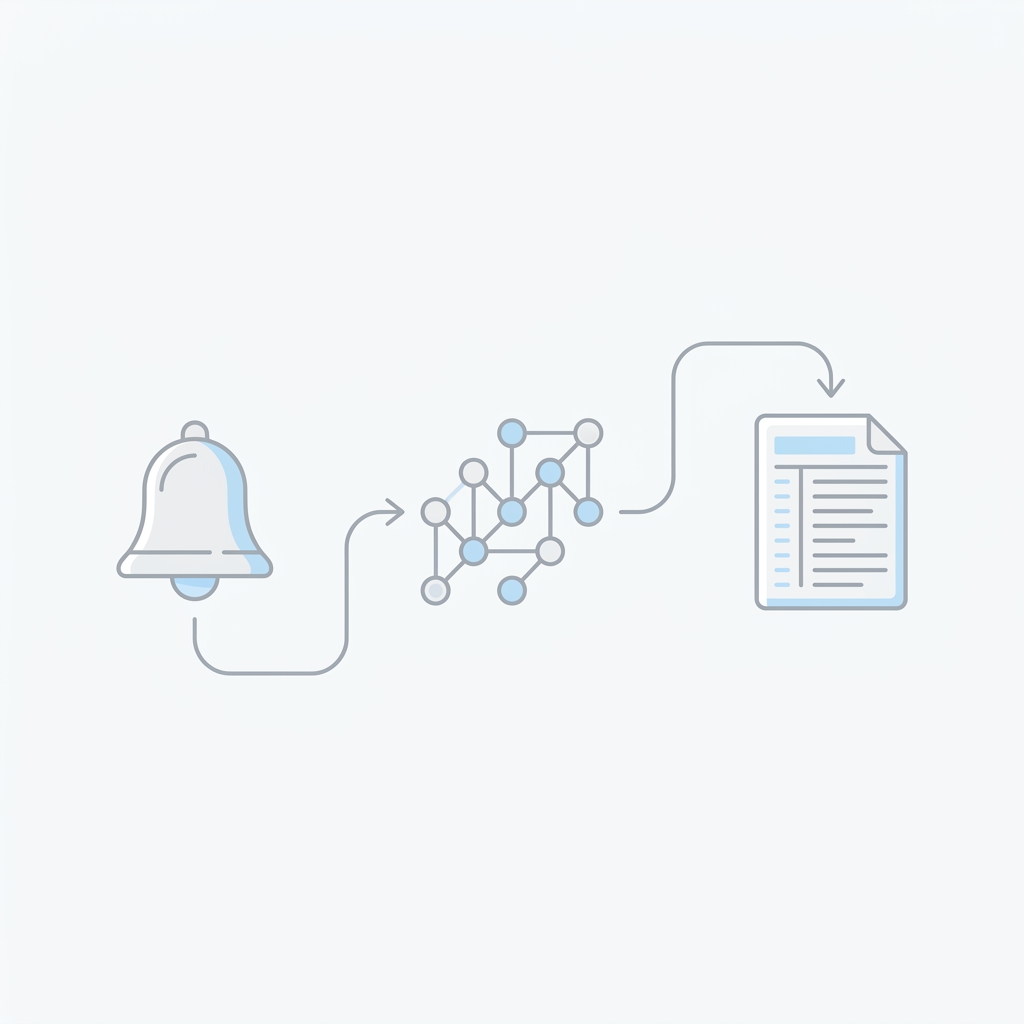
TL;DR: Connect your SLO alerts → distributed traces → correlated logs into a single click-through workflow. Our debugging time dropped from 45 minutes of guesswork to under 5 minutes of systematic isolation.
A few months ago, our user registration service started failing intermittently—sporadic latency spikes that occasionally killed sign-ups and frustrated users.
If you work in microservices, you know what happened next: five engineers on a call, scrambling across different dashboards, trying to guess which log matched which failed request.
We even tried feeding millions of raw logs into an LLM, hoping it would spot the pattern. It just hallucinated fake database errors.
The problem wasn't a lack of tools or data. Our telemetry wasn't connected. Classic dashboard blindness.
So we fixed the root cause: how engineers actually debug. By linking three layers of telemetry together, we cut Mean Time to Resolution (MTTR) by 30% and reduced debugging time from 45 minutes to under 5.
Here's the exact stack.
Layer 1: SLO-Driven Alerts (The "Why")
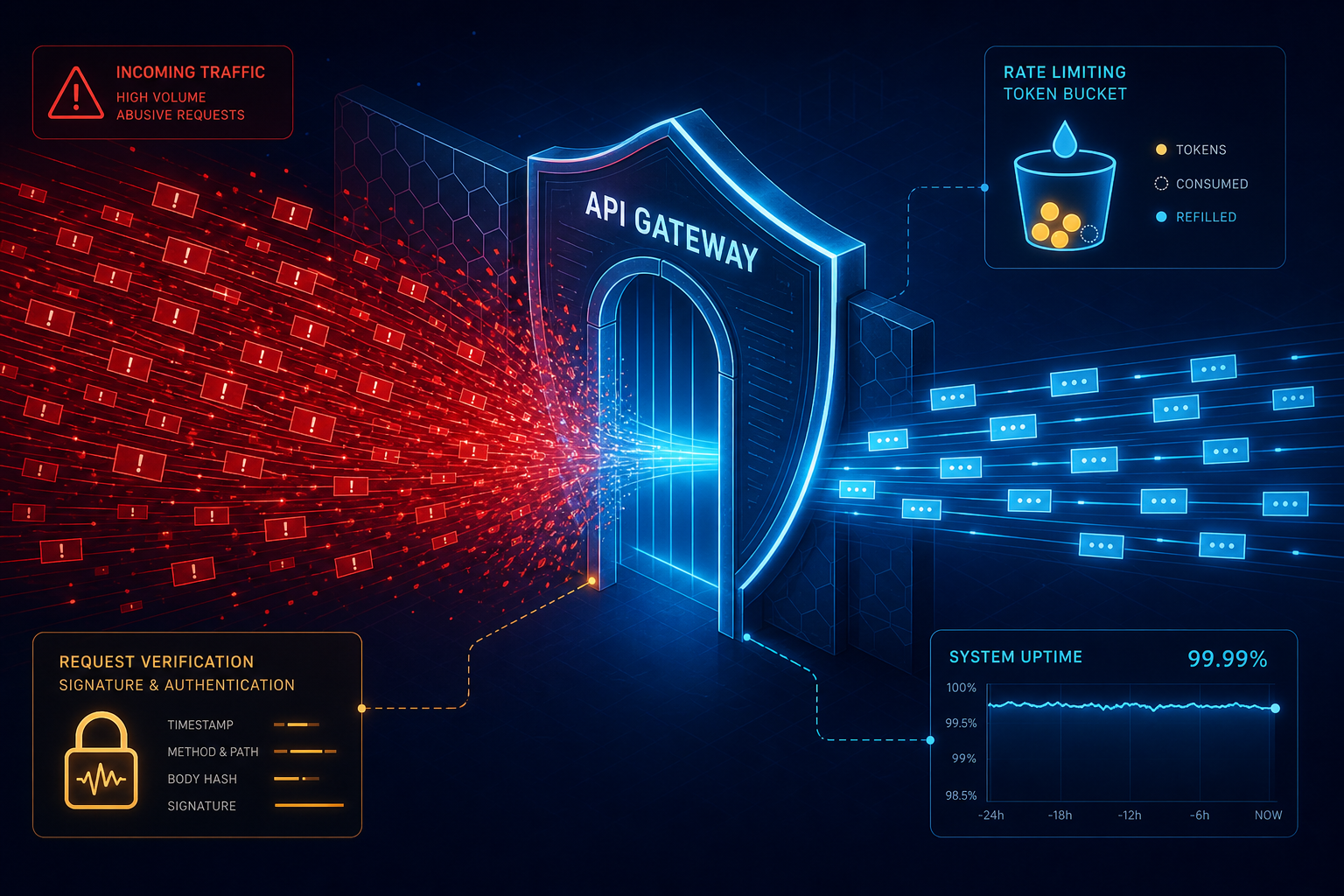
Before this overhaul, our alerting was noise. CPU spikes, memory crossing 80%, generic 500 thresholds—engineers treated PagerDuty like a spam folder.
We moved to Service-Level Objectives (SLOs) and stopped alerting on infrastructure metrics entirely. Only user-facing symptoms matter.
For registration, we defined two SLOs:
- Latency: 99% of requests complete in under 250ms (rolling 5-minute window)
- Error Rate: Less than 0.1% of requests return 5xx
If CPU spikes to 95% but latency stays under 250ms, nobody gets paged. But if p99 latency creeps to 300ms, the alert fires.
Now every page actually matters. The SLO alert answers Why—we're impacting user experience.
Layer 2: Distributed Tracing (The "Where")
Once an SLO alert fires, the immediate question is: "Which service is causing this?"
A single user request might touch an API Gateway, Auth service, Email Dispatcher, and User Database. Finding the bottleneck used to mean checking four different systems.
We implemented OpenTelemetry (OTel) across our stack. Every request gets a unique trace_id, propagated through HTTP headers (W3C Trace Context) to every downstream service and database query.
Our stack: Prometheus for SLO metrics, Jaeger for traces, Grafana for visualization. When an SLO alert fires, we click through and instantly see a waterfall chart of the request.
The trace shows: API Gateway took 2ms, Auth took 10ms, but a specific Postgres query in User Profile took 480ms.
We immediately know Where to look.
Layer 3: Trace-Correlated Logs (The "What")
Traces find the bottleneck, but they don't explain why it exists. For that, you need logs.
Our biggest gap: traces and logs lived in separate silos. We fixed this by updating our logging library (Pino) to automatically inject the active OpenTelemetry context into every log entry.
import pino from 'pino'
import { trace, context } from '@opentelemetry/api'

const logger = pino({
  mixin() {
    const span = trace.getSpan(context.active())
    if (!span) return {}
    const { traceId, spanId } = span.spanContext()
    return { trace_id: traceId, span_id: spanId }
  }
})

// Every log now automatically includes trace context
logger.info({ userId: user.id }, 'Processing user registration')
// Output: {"trace_id":"4bf92f...","span_id":"00f067...","userId":"abc123","msg":"Processing user registration"}
This was the final piece.
When an engineer identifies a slow span in Jaeger, they click "View Correlated Logs." Grafana filters Loki for that exact trace_id.
Instead of millions of logs from 50 concurrent users, the engineer sees the 12 log lines for that single request, in order. They instantly spot: Warning: Connection pool exhausted, waiting for available client.
We found the What.
The Result: Debugging with Confidence
By linking SLOs → Traces → Logs into a unified workflow, debugging transformed overnight.
When a sign-up fails today:
- SLO alert fires in Slack with trace link
- Engineer clicks through to Jaeger waterfall
- Trace highlights the slow service
- One click filters to that request's logs
Before: 45 minutes of guessing across dashboards.
After: Under 5 minutes of systematic isolation.
You don't need a magical AI tool to parse messy logs. You need a connected debugging path.
Have you connected your traces and logs? I'd love to hear what's worked (or hasn't) for your team—find me on LinkedIn.

Himanshu Shrivastava
Senior Full Stack Engineer · Node.js · React · TypeScript · AWS · Accessibility