Beyond the Hype: How We Actually Cut Boilerplate by 30% with AI Coding Assistants
Why I Stopped Treating AI Like Magic
When I first introduced AI coding assistants into my workflow, I expected either a silver bullet or a distraction. The reality was less dramatic and far more useful: a steady reduction of repetitive code work. Over two quarters, across React, Node.js, and Python services, my team and I measured roughly a 30% drop in boilerplate-heavy effort.
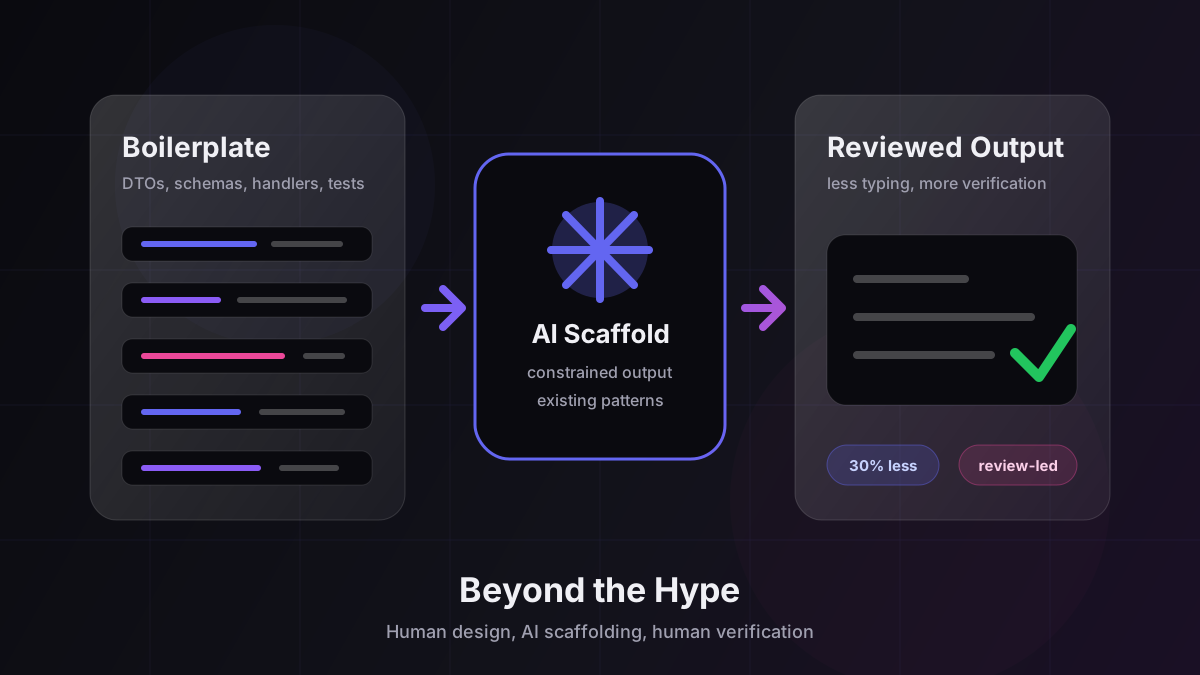
This was not because the assistant suddenly became a senior architect. It happened because we changed how we used it. Instead of asking for "build this feature," we used it for narrowly scoped tasks: generate DTOs, create validation schemas, scaffold API handlers, wire test fixtures, and produce migration skeletons.
AI did not replace decision-making. It replaced low-leverage typing.
Where Boilerplate Was Actually Hiding
Before introducing process changes, I ran a simple audit in a monorepo used by an enterprise client. We sampled recent pull requests and tagged lines as either domain logic or scaffolding. Scaffolding included:
- Repetitive type/interface definitions
- Error-handling wrappers and response mappers
- Validation and transformation glue
- Test setup (
beforeEach, factories, mocks) - API route wiring and dependency injection setup
The surprising part was not boilerplate itself, but its spread across almost every layer, from frontend form modules to backend worker consumers.
For example, this kind of route registration pattern appeared repeatedly:
import { Router } from "express";
import { validate } from "../middleware/validate";
import { createOrderSchema } from "../schemas/order.schema";
import { createOrderHandler } from "../handlers/order.handler";

const router = Router();

router.post("/orders", validate(createOrderSchema), createOrderHandler);

export default router;
Useful? Yes. Unique? Not really. When this pattern appears dozens of times, writing and reviewing it manually adds drag.
The Workflow That Delivered the 30% Reduction
What worked for us was a three-lane workflow:
- Human-owned design lane: architecture, data model, boundaries, security assumptions.
- AI-assisted scaffold lane: serializers, mappers, schema stubs, API wiring, and baseline tests.
- Human verification lane: correctness, edge cases, naming consistency, and maintainability.
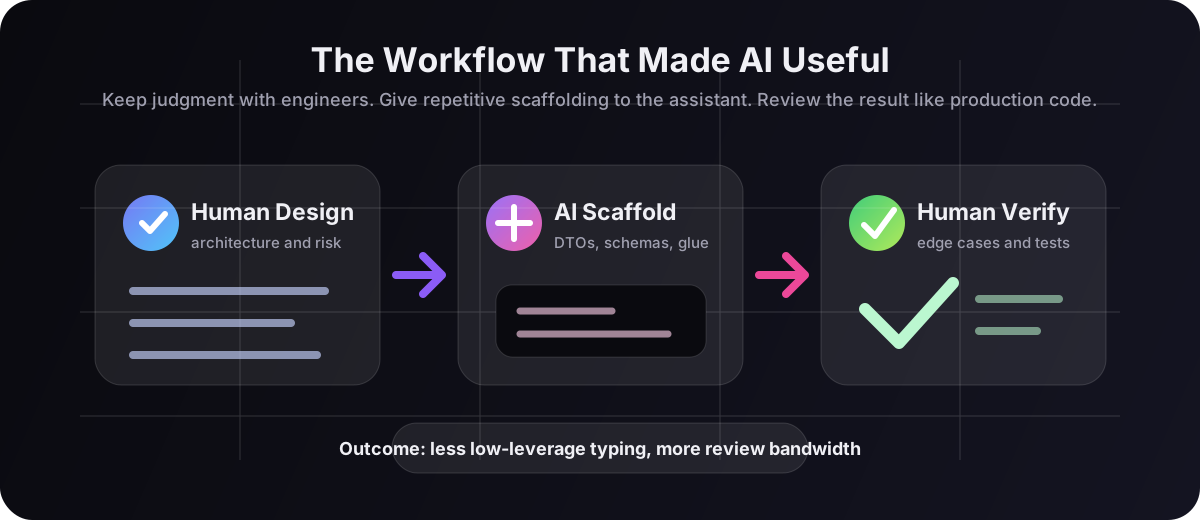
I used prompt templates tied to specific code contexts. One of my most effective patterns was asking for output constraints:
Generate a TypeScript service skeleton for payment retries.
Constraints:
- No business logic decisions
- Use existing logger and metrics interfaces
- Include TODO markers for retry policy and idempotency checks
- Return only compilable code
The explicit constraints reduced "creative" but incorrect outputs. It also made code review easier because the intent was clear: scaffolding first, logic second.
On larger stories, we paired this with CI automation to draft repetitive review notes and flag unchanged risk hotspots. The gain was not just faster coding; it was less cognitive switching between "real thinking" and copy-paste mechanics.
Practical Examples from Real Projects
In a credit workflows product I worked on, we had many event consumers with similar structure: parse message, validate payload, execute use case, acknowledge or dead-letter. AI-assisted scaffolding gave us consistent starters in minutes.
from typing import Any, Protocol
from pydantic import BaseModel, ValidationError

class CreditEvent(BaseModel):
    user_id: str
    bureau: str
    report_id: str

class CreditService(Protocol):
    def dead_letter(self, payload: dict[str, Any], reason: str) -> None: ...
    def process(self, user_id: str, bureau: str, report_id: str) -> None: ...

def handle_credit_event(payload: dict[str, Any], service: CreditService) -> None:
    try:
        event = CreditEvent(**payload)
    except ValidationError as exc:
        service.dead_letter(payload, reason=str(exc))
        return

    service.process(event.user_id, event.bureau, event.report_id)
In a frontend-heavy procurement module, we used AI to generate typed form sections and error mapping helpers. The generated code was never merged blindly, but it removed repetitive setup for every new workflow screen.
type FieldErrorMap = Record<string, string[]>;

export function mapApiErrorsToForm(errors: FieldErrorMap) {
  return Object.entries(errors).reduce<Record<string, string>>((acc, [key, value]) => {
    acc[key] = value?.[0] ?? "Invalid value";
    return acc;
  }, {});
}
This consistency lowered onboarding time for new contributors because modules looked familiar from day one.
What Didn’t Work (and Cost Us Time)
Early on, we made predictable mistakes:
- Asking for full feature implementations in one prompt
- Accepting generated abstractions without validating real usage
- Feeding stale or partial context, so suggestions referenced code we had already changed
- Reviewing AI code with the same shallow pass used for generated config files
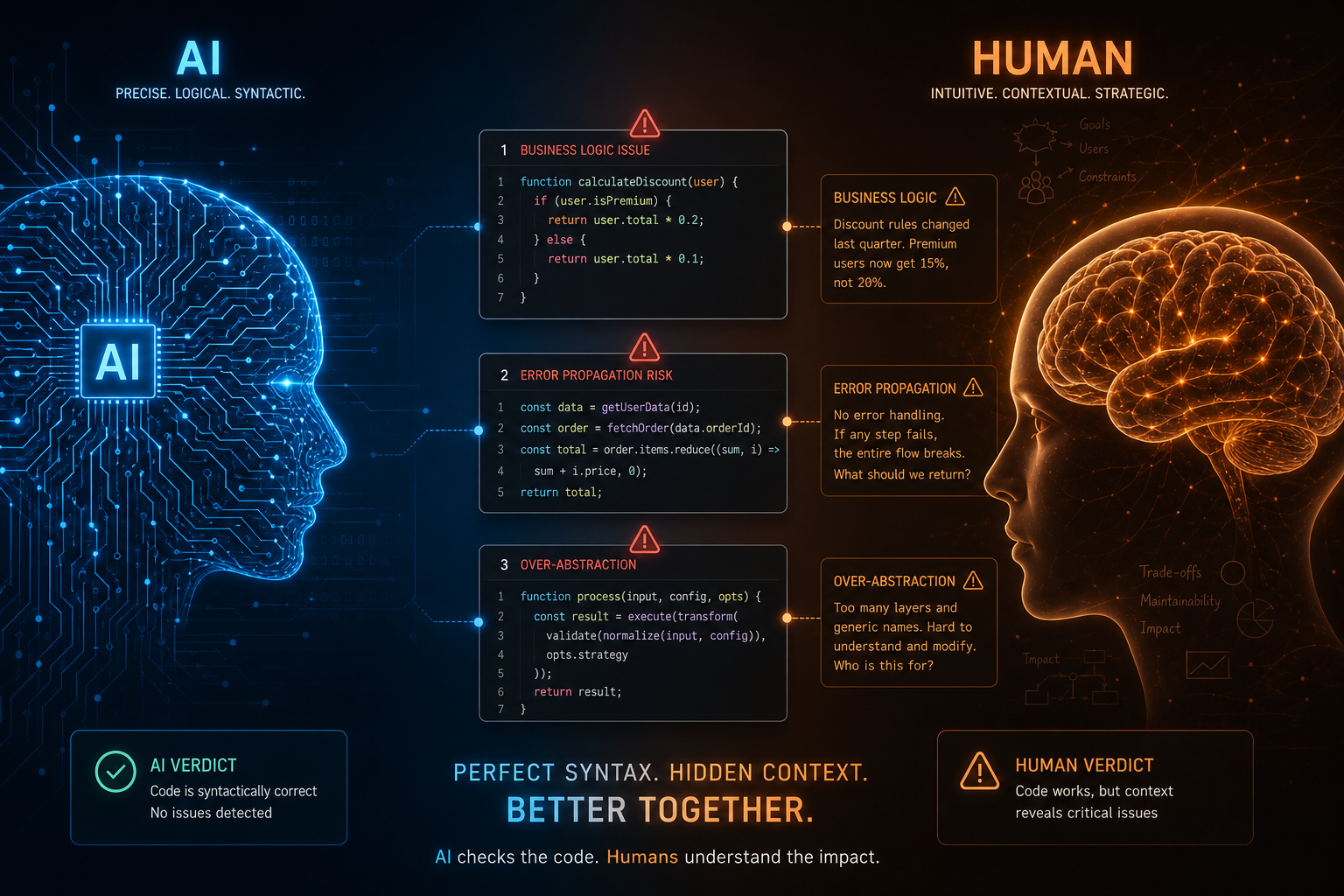
The worst failures came when generated code looked polished but hid incorrect assumptions around retries, concurrency, or authorization. In one case, a generated helper silently swallowed an exception that should have triggered a retry path.
My rule now is simple: the higher the production risk, the less autonomy AI gets.
For critical paths, I require:
- Clear invariants in comments or tests
- Explicit failure behavior
- Observability hooks (
logs,metrics,trace IDs) - Scenario-based tests for unhappy paths
This keeps the time savings focused on repetitive layers while preserving rigor where it matters.
Key Takeaways
If you want measurable gains from AI coding assistants, treat them like a productivity system, not a novelty. In my experience, the 30% reduction came from disciplined process, not model hype.
- Measure before optimizing: identify where scaffolding dominates effort.
- Constrain outputs: ask for skeletons, not architectural decisions.
- Protect high-risk logic: keep business rules and failure strategy human-led.
- Standardize review patterns: generated code deserves strict verification.
- Optimize for team leverage: consistency and onboarding gains compound over time.
I still write plenty of code manually, especially where product nuance lives. But I no longer spend prime engineering hours hand-crafting repetitive wrappers and glue code, which freed review bandwidth for the edge cases and cross-service contracts that actually determine production outcomes.

Himanshu Shrivastava
Senior Full Stack Engineer · Node.js · React · TypeScript · AWS · Accessibility