From 400K Users to 99.9% Uptime: Lessons from Scaling a Fintech Microservices Platform
When I co-founded ByajBook in 2021, we had a simple premise: peer-to-peer lending should be as easy as sending a WhatsApp message. What we didn't anticipate was that our simple MVP would need to scale to 400K+ users within two years — while simultaneously migrating away from the monolith that got us there.
This is the story of how we did it without a single night of downtime.
The Problem: A Monolith at Its Limits
Our first version was a classic Node.js + PostgreSQL monolith. It worked beautifully for the first 10K users. By 50K, we started seeing cracks:
- Deployment windows of 2+ hours (which meant 2 hours of partial downtime)
- A single slow database query could block the entire application
- Horizontal scaling meant duplicating everything, including the parts that didn't need scaling
- Our on-call rotation was a nightmare — every alert was potentially catastrophic
# Our original architecture (simplified):
┌─────────────────────────────────────────┐
│           Monolithic Node.js App         │
│                                          │
│  Auth │ Loans │ Payments │ Notifications │
│                                          │
└─────────────────┬────────────────────────┘
                  │
         ┌────────▼────────┐
         │  Single PostgreSQL│
         └──────────────────┘
The breaking point came during Diwali 2022. We had a 10x spike in loan applications, and the entire platform went down for 4 hours. We lost real money, real users, and real trust.
The Architecture Decision
We evaluated three options:
| Approach | Pros | Cons |
|---|---|---|
| Vertical scaling | Fast, cheap | Can't solve logical coupling |
| Serverless | Excellent scaling | Cold starts, complex DX |
| Microservices on ECS | Control + scalability | Operational complexity |
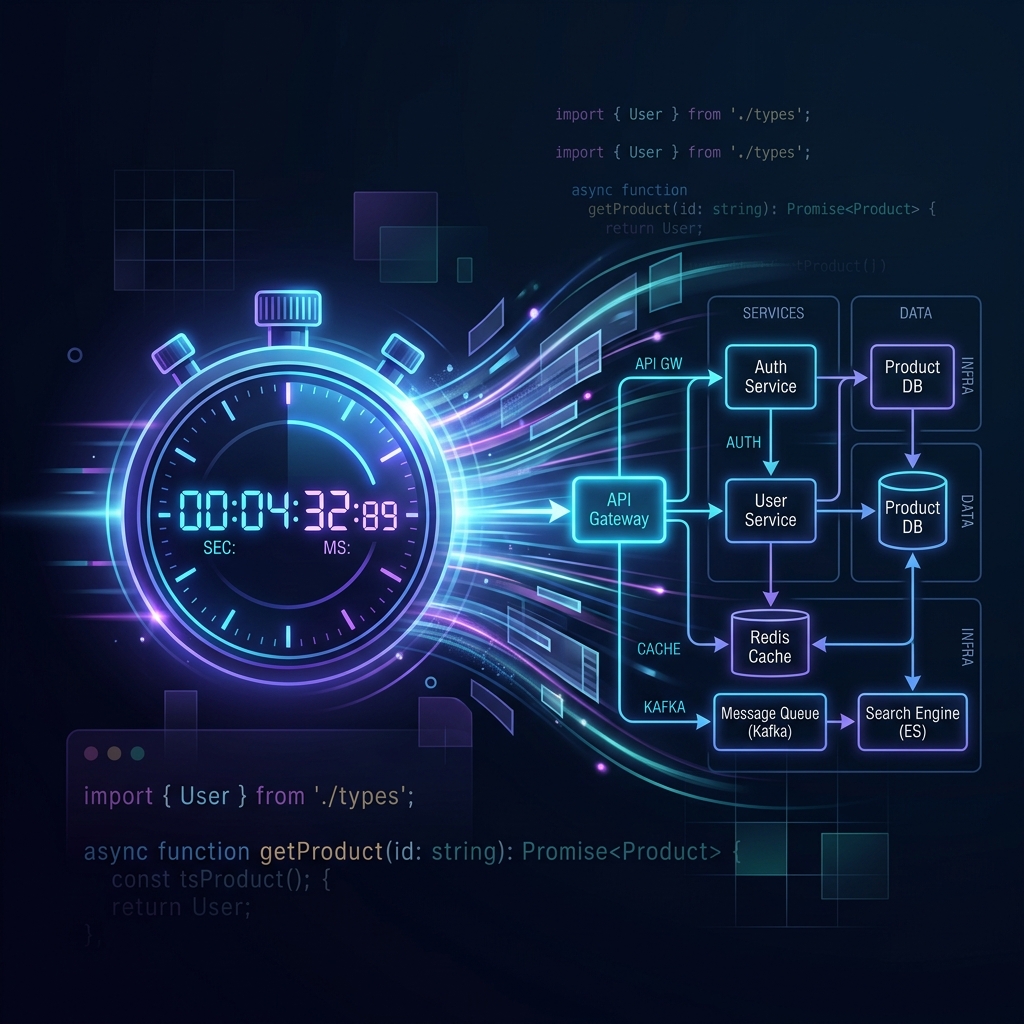
We chose microservices on AWS ECS with Fargate, backed by Redis for session management and cross-service messaging via RabbitMQ.
The Migration Strategy: Strangler Fig
We used the Strangler Fig pattern — gradually extracting services from the monolith without a big bang rewrite.
Phase 1 — Extract the Notification Service (Week 1-3)
This was the safest first extraction because notifications are fire-and-forget. We:
- Created a new
notification-servicein a separate repo - Had the monolith publish events to RabbitMQ instead of calling notifications directly
- Deployed the new service alongside the monolith
- Monitored for 2 weeks before removing the old notification code
Phase 2 — Extract Authentication (Week 4-8)
Auth is critical, so we moved carefully:
// Before: Auth was embedded in the monolith
router.post('/login', async (req, res) => {
  const user = await db.findUser(req.body.email)
  const token = jwt.sign({ userId: user.id }, process.env.JWT_SECRET)
  res.json({ token })
})

// After: Auth service with its own database
// monolith calls auth-service via internal service mesh
const authResponse = await axios.post(
  `${AUTH_SERVICE_URL}/validate`,
  { token: req.headers.authorization }
)
Phase 3 — Extract the Loan Engine (Week 9-16)
The loan engine was our core domain logic — the most complex extraction. We:
- Built an anti-corruption layer between old and new code
- Used feature flags to route a small % of traffic to the new service
- Gradually increased the percentage as confidence grew
The Results
After 6 months of careful migration:
- Infrastructure costs: Down 35% (independent scaling of each service)
- Deployment time: From 2+ hours to under 10 minutes per service
- Uptime: 99.9% SLA consistently achieved
- On-call alert volume: Down 65% (better isolation means fewer cascading failures)
Key Lessons
1. Start with the least critical service. Your Notification or Email service is a perfect first extraction — low risk, high learning value.
2. Your database is the hardest part. We kept a shared database for longer than ideal because splitting it requires careful data ownership design.
3. Observability before you split. We invested heavily in NewRelic instrumentation before starting the migration. Flying blind during a microservices migration is a recipe for disaster.
4. The Strangler Fig pattern works. Resist the urge to do a big-bang rewrite. Migrate incrementally, and your users won't notice.
If you're considering a similar migration, I'm happy to chat. Hit me up on LinkedIn.

Himanshu Shrivastava
Senior Full Stack Engineer · Node.js · React · TypeScript · AWS · Accessibility