The Invisible ROI of Developer Experience: Eliminating Friction Beyond Keystrokes
When engineering teams talk about Developer Experience (DevEx), the conversation usually pivots straight to metrics like build times, CI runner speeds, or the adoption of the latest AI coding assistants. While these are undeniably important, I've found over my career that they only scratch the surface of true engineering productivity.
In a past role where I led a transition from a monolithic architecture to microservices serving over 400,000 users, we initially celebrated cutting our deployment times in half. It felt like a massive DevEx win. Yet, developers were still burning out, and feature velocity plateaued. The reality was stark: we had accelerated the final step of shipping, but the cognitive load required to get code ready to ship remained incredibly high.
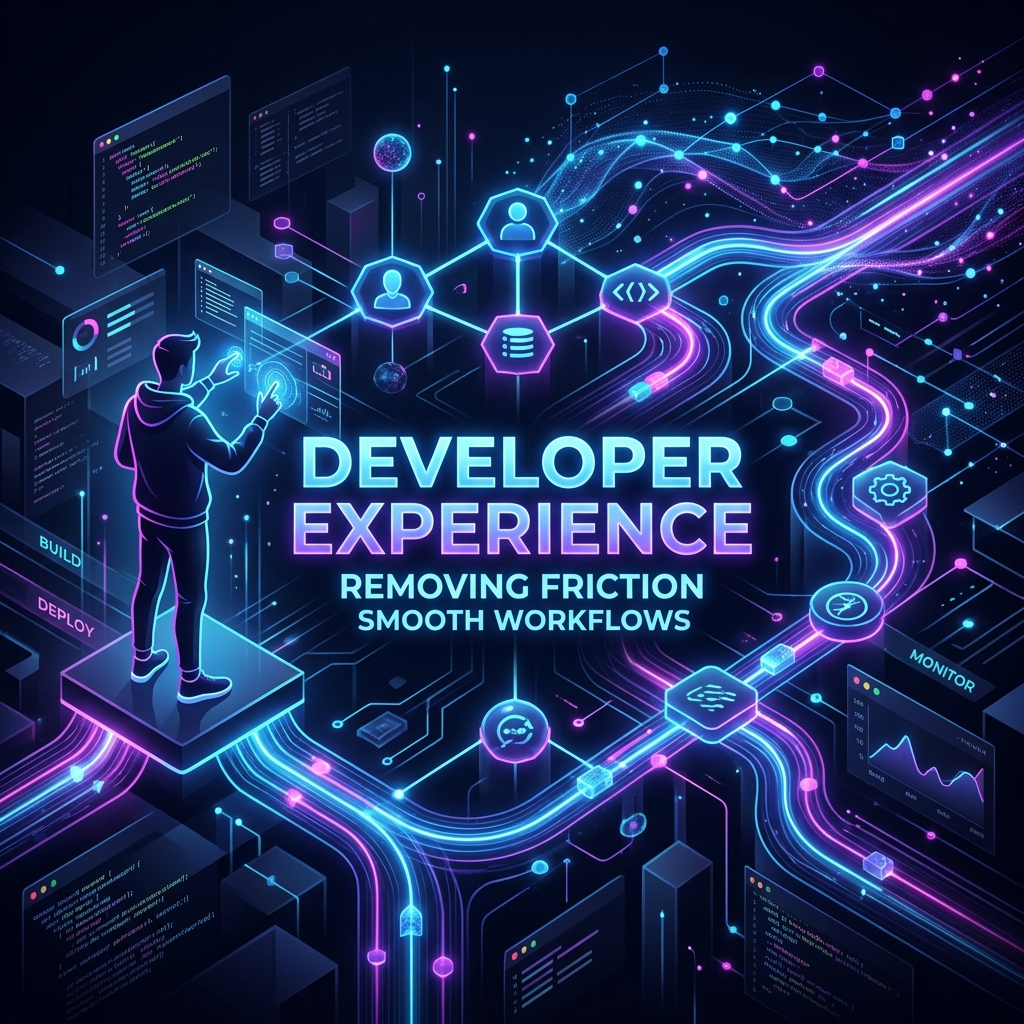
True DevEx isn’t just about typing faster or waiting less; it’s about treating the internal engineering workflow as a tier-one product. It’s about aggressively eliminating the invisible friction and "paper cuts" that drain a developer’s energy before they even open a pull request.
Measuring the Unmeasurable: Cognitive Load
Cognitive load is the silent velocity killer. Every time a developer has to pause feature work to figure out why their local environment is diverging from production, or manually check if their new UI component meets accessibility guidelines, you aren't just losing minutes—you're losing context. Context switching is notoriously expensive.
I experienced this acutely while managing multiple concurrent engineering workstreams. We realized that our engineers were spending up to 20% of their week just setting up scaffolding, wrestling with environment variables, and cross-referencing wiki pages that were perpetually out of date.
To combat this, we stopped trying to measure productivity purely through ticket velocity and started measuring friction. We implemented a simple DevEx survey asking engineers where they felt the most pain. The results were illuminating. The bottlenecks weren't in the code they were writing; they were in the boilerplate, the ambiguous error logs, and the manual compliance checks.
Another massive friction point is on-call rotations. We realized that unclear runbooks and scattered observability dashboards were causing immense stress during production incidents. By consolidating our monitoring stack and improving our incident handling practices, we reduced Mean Time to Resolution (MTTR) by 35%. More importantly, we reduced the anxiety associated with being on-call. Good DevEx means an engineer shouldn't dread carrying the pager.
Shifting Left Without Shifting the Burden
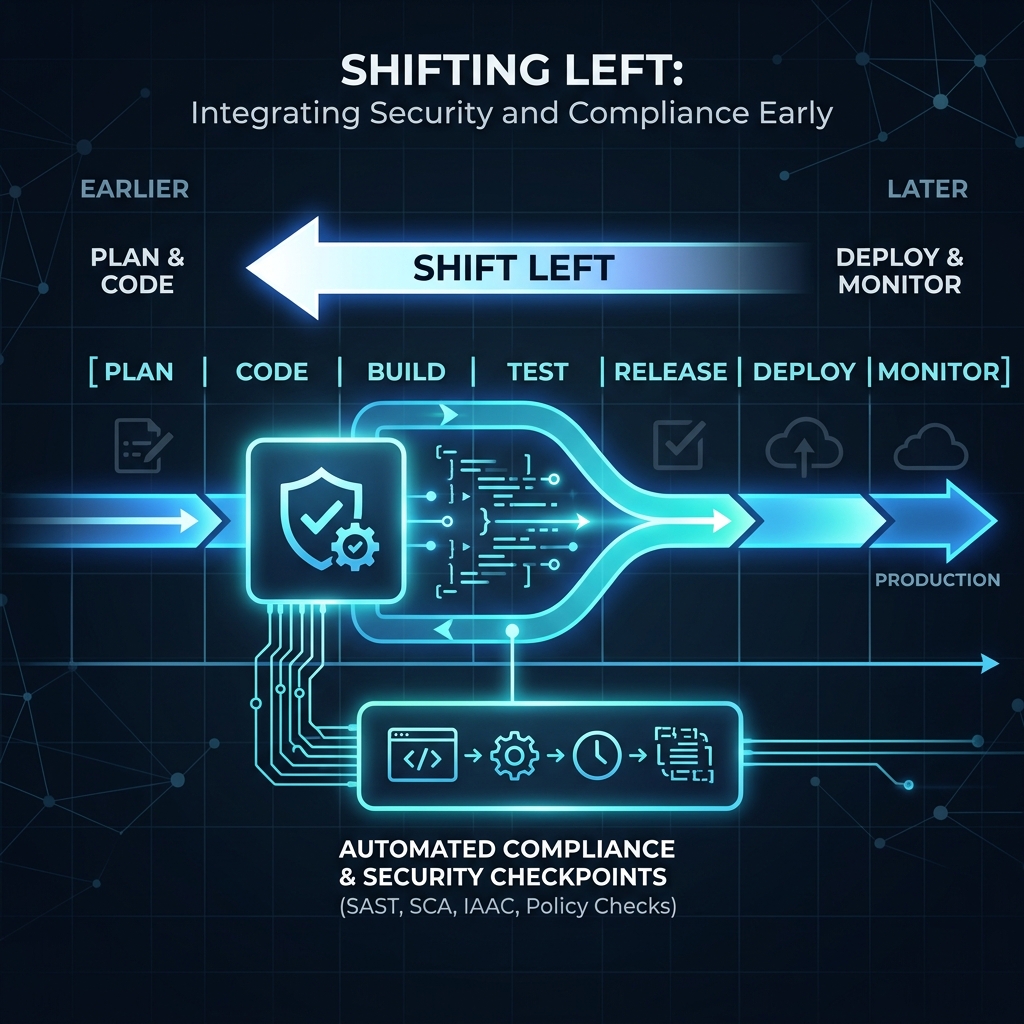
"Shift left" is the industry's favorite buzzword for moving security, testing, and compliance earlier into the development lifecycle. But if done poorly, shifting left just means dumping more operational responsibilities onto product engineers, which actively hurts DevEx.
For example, when we needed to enforce strict WCAG 2.1 AA accessibility standards across multiple enterprise client projects, simply handing developers a checklist would have been disastrous. Instead, we shifted left by integrating the checks seamlessly into the tools they were already using.
We configured custom ESLint rules to catch accessibility violations directly in the IDE, before the code was even committed.
// .eslintrc.js configuration for automated accessibility checks
module.exports = {
  extends: [
    'eslint:recommended',
    'plugin:react/recommended',
    'plugin:jsx-a11y/recommended' // The heavy lifter for DevEx
  ],
  rules: {
    // Elevating critical a11y issues to build-breaking errors
    'jsx-a11y/alt-text': 'error',
    'jsx-a11y/aria-props': 'error',
    'jsx-a11y/no-interactive-element-to-noninteractive-role': 'warn',
  }
};
By failing the build locally and pointing exactly to the missing aria-label, we cut production accessibility bugs by 45% without requiring engineers to become compliance experts. The tool became the teacher, removing the cognitive burden of manual verification.
Standardizing the Path of Least Resistance
One of the highest-leverage DevEx improvements you can make is to pave "golden paths"—standardized, automated ways of building and deploying that require zero bespoke configuration. When building a distributed platform, having every microservice define its own deployment strategy is a recipe for chaos.
We tackled this by centralizing our CI/CD workflows. Instead of every team maintaining their own complex YAML pipelines, we provided parameterized, reusable templates. If you wanted to spin up a new Node.js service, you didn't have to learn the intricacies of container orchestration or state files. You simply referenced the standard pipeline.
# Reusable CI/CD workflow abstracting away infrastructure complexity
name: Standard Microservice Deployment

on:
  push:
    branches: [ main ]

jobs:
  deploy:
    uses: ./.github/workflows/golden-path-deploy.yml
    with:
      service_name: 'payment-gateway'
      runtime: 'nodejs20'
      requires_redis: true
    secrets:
      aws_access_key: ${{ secrets.AWS_DEPLOY_KEY }}
This abstraction reduced the time required to scaffold and deploy a new service from days to hours. Engineers were free to focus on business logic—the path of least resistance was also the most secure and reliable path.
The Role of AI in the Modern DevEx Stack
You can't discuss DevEx today without touching on artificial intelligence. However, the true value of AI isn't just in generating boilerplate—it's in acting as a context-aware assistant that smooths out workflow friction.
Recently, I architected workflows integrating AI-based PR reviews directly into our CI pipelines. Rather than having senior engineers spend hours performing preliminary code reviews—checking for style consistency, obvious performance pitfalls, or missing unit tests—we let an agentic AI handle the first pass.
# Pseudo-code for an agentic PR review trigger in our pipeline
def handle_pr_opened(event):
    pr_diff = get_pull_request_diff(event.pr_id)

    # AI analyzes diff against repository's specific coding guidelines
    review_comments = ai_agent.analyze_code(
        diff=pr_diff,
        context=get_repo_context(),
        focus_areas=["security", "performance", "readability"]
    )

    if review_comments:
        post_comments_to_github(event.pr_id, review_comments)
    else:
        approve_first_pass(event.pr_id)
This didn't replace human reviews; it elevated them. By the time a human looked at the PR, the trivial issues were already resolved. This workflow alone saved over six hours of manual review overhead per engineer every week. AI became a DevEx multiplier, handling the mundane so engineers could focus on architecture and logic.
Key Takeaways
Developer experience is the foundation of engineering velocity. When you remove friction, you don't just get code out faster; you build a culture where engineers are engaged, creative, and less prone to burnout.
If you're looking to elevate DevEx in your organization, keep these principles in mind:
- Measure Friction, Not Just Output: Ask your team where they feel blocked. The biggest gains often come from automating the unglamorous parts of the workflow, like local environment setup and compliance checks.
- Make "Shift Left" Automated, Not Manual: Don't give developers more checklists. Integrate checks directly into their IDEs and pre-commit hooks so the tooling enforces the standards automatically.
- Pave Golden Paths: Standardize the boring stuff. Reusable CI/CD pipelines and infrastructure templates allow engineers to focus on product differentiation, not boilerplate.
- Leverage AI for Workflow, Not Just Coding: Use agentic workflows to automate the peripheral tasks around coding, like initial PR reviews and test generation, to keep human reviewers focused on high-level design.
Investing in DevEx is an investment in your people. When the tooling gets out of the way, the engineering magic happens.

Himanshu Shrivastava
Senior Full Stack Engineer · Node.js · React · TypeScript · AWS · Accessibility