What 1,900 Caveman-Mode Messages Taught Me About AI Token Compression
Why I Started Counting Output Tokens
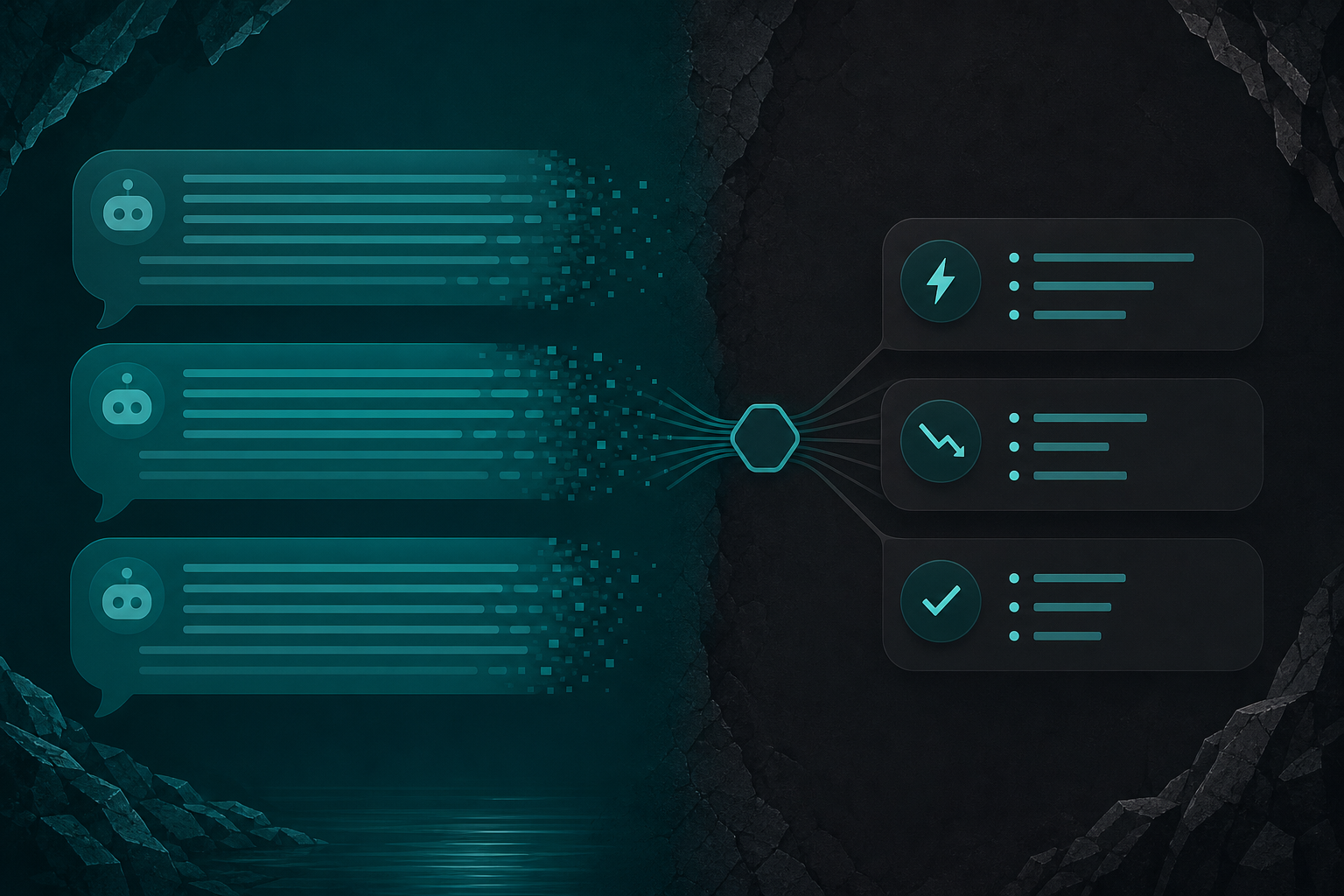
Caveman is the open-source skill that makes AI coding agents drop filler and speak in fragments — "why use many token when few token do trick." The published benchmark claims ~65% fewer output tokens with full technical accuracy preserved.
I wanted numbers from my own workflow, not a README chart. So I parsed session logs from every stretch where Caveman was actually active — not installed, not configured, but on — across May through mid-June 2026.
The result: ~14 active sessions, roughly 1,900 compressed assistant turns, and ~68,000 output tokens while caveman rules were in effect — 4,056 measured from Claude Code usage.output_tokens, the rest estimated from Cursor transcript volume. Four activation patterns emerged. Each one suited a different kind of work.
Method note: Claude Code sessions report exact
output_tokensper turn. Cursor sessions don't expose token counts in transcripts, so those figures use the standard prose estimate (~4 characters per token). Directional comparisons hold; absolute Cursor numbers are approximate.
The Active Sessions at a Glance
| Context | How caveman was armed | Active sessions | Compressed turns | Output tokens | Avg tokens / turn |
|---|---|---|---|---|---|
| Desktop pet app (Electron) | alwaysApply Cursor rule | 7 | 797 | ~29,000 (est.) | ~36 |
| Internal tools monorepo | Skill attached at session start | 3 | ~900 | ~29,000 (est.) | ~32 |
| Fintech backend (Node.js) | /caveman before execution work | 2 | 159 | ~6,800 (est.) | ~27–59 |
| Content pipeline (Claude Code) | SessionStart hooks, full mode | 3 | 42 | 4,056 (measured) | ~97 |
Every row above is time I spent with compression live — terse status updates instead of essay paragraphs, and context windows that lasted longer on marathon agent loops.
Activation 1: /caveman Before Execution-Heavy Work
The fintech backend sessions were the first time I deliberately armed compression before a concrete deliverable.
I typed /caveman at the start of a Docker optimization push: Alpine base, jemalloc, lockfile-first npm ci, compose replica tuning. The agent had already done the work. I needed a status read, not a lecture.
What came back (~45 output tokens):
"Done already: Dockerfile Alpine jemalloc… PR open… Image ~1.34GB (was ~1.85GB). You do: link ticket, smoke test compose. Next? Say task."
159 compressed turns across two sessions. ~6,800 estimated output tokens total. Status replies ran ~27 tokens; turns that included diff walkthroughs ran ~59 tokens — still a fraction of the ~150+ tokens the same updates typically cost in default mode.
This is where caveman earned its keep for me:
- PR review loops — one-line findings (~20–40 tokens) instead of paragraph preambles (~120+ tokens)
- Infrastructure diffs — "file changed, reason, your action" format
- Multi-step CI fixes — next step visible without a 50-token "Certainly! I'd be happy to help" opener
Caveman's boundary rules matter here: code, commits, and PR bodies stay normal. Only the prose wrapper compresses. My Dockerfile and compose YAML didn't turn into abbreviations — the agent just stopped narrating every step it had already taken.
# How I arm it for a focused backend session
/caveman

# Or attach the skill manually in Cursor before the first prompt
# Then give a task with clear scope — compression works best with execution, not exploration
Activation 2: Skill Attached for Long Agent Loops
The internal tools monorepo produced my heaviest caveman usage: three June sessions, ~900 compressed turns, ~29,000 estimated output tokens, spanning PDF generation fixes, Firestore security rule hardening, and full PR review cycles with Trello card updates.
I attached the Caveman skill at session start — often with /caveman in the opening prompt — and left it on for the entire loop.
First reply after attach (~12 output tokens):
"PDF spacing fix. Find PDF generation code first."
No greeting. No "I'll help you with that." The agent immediately ran file search, read pdfBarcode.ts, adjusted spacing constants, and reported back in the same compressed register through 261 turns (~8,400 estimated output tokens) in one session alone.
PR review summaries compressed the same way. Instead of a ~80-token preamble:
"I've reviewed the bot comments and found several issues worth addressing. The first one relates to the Firestore rules..."
I got a ~35-token summary:
"3 bot comments triaged. 2 fixed, 1 acknowledged. Pushed
625ca76, replied inline on each thread."
Then a numbered chain — security finding, dead state removal, advisory acknowledged — each item ~15–25 tokens.
Average output per turn in these sessions: ~32 tokens for status and reasoning prose. Tool payloads and generated code remained full-fidelity — those tokens aren't what caveman targets.
This pattern fits work where:
- The agent runs for hours across dozens of tool calls
- You already know the architecture — you need signal, not teaching
- Review loops generate repetitive narration that burns hundreds of output tokens per cycle
My habit now: attach caveman before the first prompt on any session I expect to exceed 50 tool calls.
Activation 3: Always-On Rules for Daily Driver Repos
The desktop pet project — an Electron overlay app — is where I stopped thinking about caveman entirely.
I added a Cursor rule with alwaysApply: true:
---
description: "Caveman mode — terse communication, ~75% fewer tokens, full technical accuracy"
alwaysApply: true
---

Respond terse like smart caveman. All technical substance stay. Only fluff die.

Rules:
- Drop articles, filler, pleasantries, hedging
- Fragments OK. Short synonyms. Technical terms exact. Code unchanged.
- Pattern: [thing] [action] [reason]. [next step].
- Auto-Clarity: normal prose for security warnings, irreversible actions
- Boundaries: code/commits/PRs written normal

Switch: `/caveman lite|full|ultra` — Stop: "stop caveman" or "normal mode"
Seven sessions since June 11. 797 compressed turns. ~29,000 estimated output tokens. ~36 tokens per turn on average. Zero manual /caveman invocations — I just opened the repo and started working.
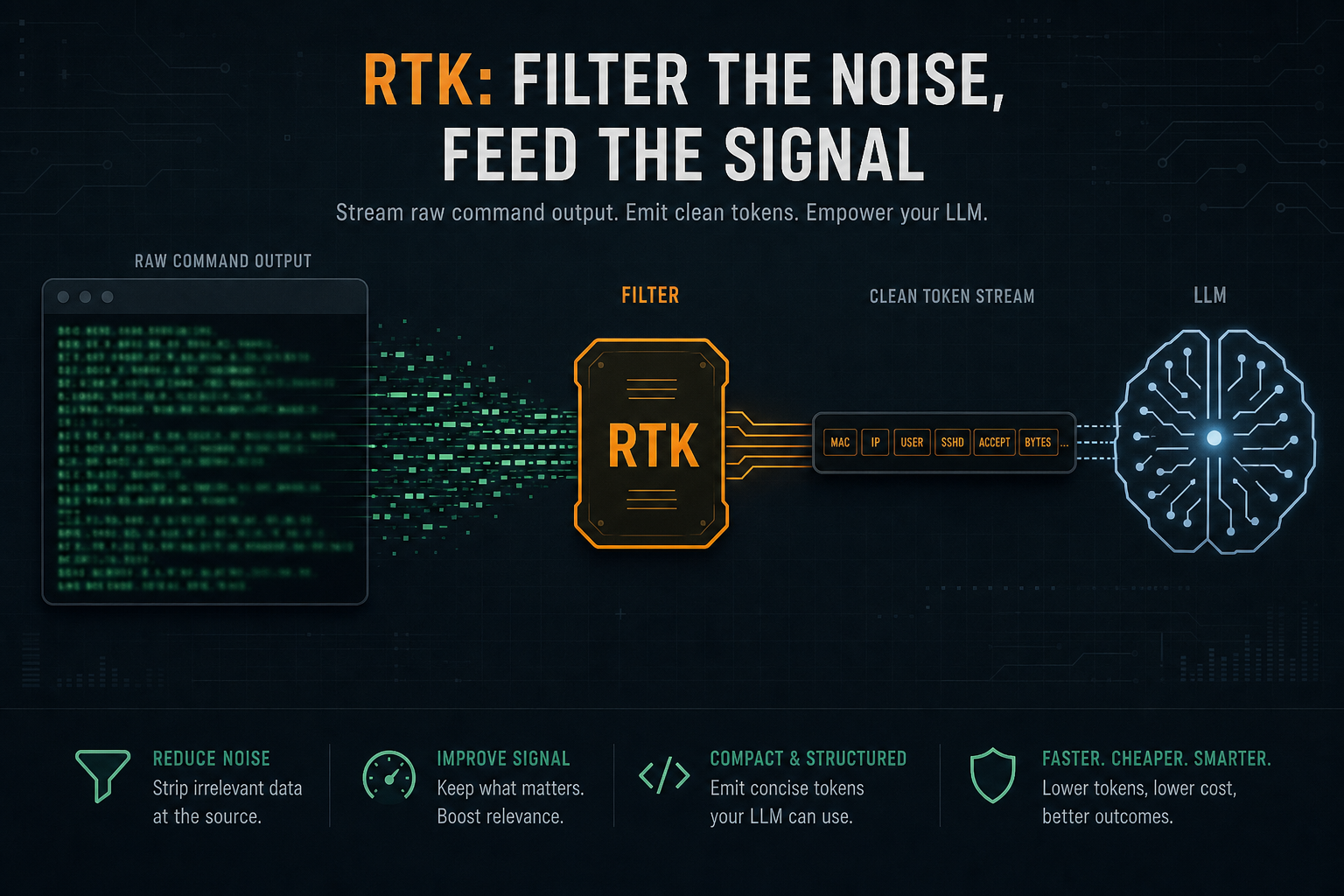
The sessions covered real feature work: modularizing main.js, adding native workspace watchers, wiring RTK shell hooks, updating AGENTS.md and project skills. The agent reported progress in ~40 tokens:
"Throttle extracted to
src/shared/throttle. Tests pass. Native watcher build green. Next: agent infra files."
Across a 331-turn session, that brevity compounds. At ~125 output tokens per verbose status turn, narration alone would cost ~41,000 tokens. At ~36 tokens per turn with caveman active, the same session spent ~12,000 tokens on prose — ~29,000 tokens of headroom that kept the refactor coherent without mid-stream context pruning.
At Claude Sonnet output pricing (~$15/M tokens), that's roughly $0.44 saved in a single session on narration alone. Scale that across seven sessions and the always-on rule pays for its setup in an afternoon.
This is my default for daily-driver repos where I live in agent loops every week.
Activation 4: Claude Code Hooks from Session Start
Three Claude Code sessions on my content pipeline — 42 assistant turns, 4,056 measured output tokens — ran with SessionStart hooks injecting caveman rules before message one. This is the only stretch where every number comes from usage.output_tokens in the session log, not estimation.
The hook payload is explicit:
CAVEMAN MODE ACTIVE — level: full
Drop articles/filler/pleasantries/hedging. Fragments OK.
Code/commits/security: write normal.
Replies during active caveman time (~77 measured output tokens on a typical status turn):
"Context loaded. Working directory: content-engine. Git status shows 8 modified files + 2 untracked + 3 new. What move next?"
That's ~97 tokens per turn on average across all 42 turns — including turns where the agent emitted longer file lists. Pure status replies ran ~60–80 output tokens versus the ~200+ I'd expect in default mode for the same content.
Applying Caveman's 65% benchmark to the measured baseline: without compression, those 42 turns would have consumed roughly ~11,600 output tokens. With caveman active, 4,056. Estimated savings: ~7,500 output tokens in one afternoon.
Claude Code also reinforces caveman on every user prompt via a lightweight hook injection:
CAVEMAN MODE ACTIVE (full). Drop articles/filler/pleasantries/hedging.
Fragments OK. Code/commits/security: write normal.
That per-turn reinforcement mattered. Without it, models drift back to verbose mid-conversation — especially after context compression prunes the SessionStart rules.
// ~/.claude/settings.json — hooks that keep caveman armed
{
  "hooks": {
    "SessionStart": [{
      "hooks": [{
        "type": "command",
        "command": "node ~/.claude/hooks/caveman-activate.js"
      }]
    }],
    "UserPromptSubmit": [{
      "hooks": [{
        "type": "command",
        "command": "node ~/.claude/hooks/caveman-mode-tracker.js"
      }]
    }]
  }
}
Track the savings officially:
/caveman-stats
# Reads session log output_tokens, estimates savings vs 65% benchmark
# Writes to ~/.claude/.caveman-history.jsonl for lifetime aggregation
What Compression Preserved (and What It Changed)
Across all ~68,000 output tokens in active caveman sessions, the pattern held:
Unchanged (full token cost):
- Code blocks, diffs, commit messages, PR descriptions
- Security warnings and irreversible action confirmations (caveman's "auto-clarity" escape hatch)
- Tool call payloads and error strings — quoted exact
Compressed (fewer output tokens):
- Status narration between tool calls — typically 60–70% fewer tokens per turn
- "Here's what I found" preambles before bullet lists
- Review summaries and next-step suggestions
- Repeated context re-statements in long sessions
The fintech Docker session proved the boundary rule in practice: the agent spent tokens on normal, reviewable YAML and Dockerfile output while keeping explanations in caveman register. The internal tools PR loop did the same — full Firestore rule diffs at standard token cost, compressed triage commentary at ~32 tokens per turn.
Input Tokens: The Savings I Haven't Captured Yet
Everything above is output token compression — what the agent generates per turn. Caveman also targets input tokens via memory file compression:
/caveman-compress AGENTS.md
# Compressed AGENTS.md for the agent; AGENTS.original.md for your edits
# Claimed ~46% reduction in input tokens loaded every session start
I haven't run this on my repos yet. Every active session still loaded full-length agent context files at session start. Output compression saved ~68k tokens over three weeks. Input compression would stack on top — same AGENTS.md read every time, fewer input tokens before the first reply.
That's the next measurement pass.
When I Turn Caveman On Now
After ~68,000 output tokens of active caveman time, I match activation to the work:
# When I arm caveman — based on active session data

always_on_rule:
  fit: daily-driver repos, recurring agent loops
  example: Electron desktop app — 797 turns, ~29k output tokens, ~36 tokens/turn
  wiring: .cursor/rules/caveman.mdc with alwaysApply: true

session_start_attach:
  fit: long execution sessions (50+ tool calls), PR review loops
  example: internal tools monorepo — ~900 turns, ~29k output tokens, ~32 tokens/turn
  wiring: attach caveman skill + /caveman in first prompt

pre_task_invoke:
  fit: focused infra/devops pushes with clear deliverable
  example: fintech backend Docker — 159 turns, ~6.8k output tokens, ~27–59 tokens/turn
  wiring: /caveman before scope-bound task

claude_code_hooks:
  fit: every Claude Code session on paid API models
  example: content pipeline — 42 turns, 4,056 measured output tokens, ~7.5k saved
  wiring: SessionStart activate + UserPromptSubmit reinforce
  tip: default to lite for exploration, full for execution
Mode selection: lite drops filler but keeps sentences readable (~30% token reduction). full drops articles and uses fragments (~65% on prose). ultra when you're burning output tokens on a marathon session and already know the codebase cold (~75%).
Key Takeaways
These lessons come from active caveman time only — ~68,000 output tokens across ~1,900 turns where compression was live.
-
Always-on rules: ~29,000 output tokens across 797 turns (~36 tokens/turn) in seven desktop app sessions — zero manual invocation, ~29k tokens saved vs verbose baseline in the longest refactor alone.
-
Session-start attach: ~29,000 output tokens across ~900 turns (~32 tokens/turn) on internal tools work — PDF fixes, security rules, PR triage — without reducing token spend on diffs or commits.
-
/cavemanbefore execution: ~6,800 output tokens across 159 turns (~27–59 tokens/turn) on Docker optimization — status reads that would cost ~150+ tokens each dropped to under 60. -
Claude Code hooks: 4,056 measured output tokens across 42 turns — ~7,500 tokens saved vs estimated verbose baseline, tracked via
usage.output_tokensnot guesswork. -
Code stayed full-cost; prose compressed — every activation pattern spent normal tokens on diffs, commits, and security warnings while cutting narration that was eating output token budget on long loops.
Caveman's benchmark is output tokens. My data says the real win is context endurance — the same 300-turn session stays coherent because the agent stops re-explaining what you already know, turn after turn, token after token.
Arm it before the loop starts. Measure with /caveman-stats. Compress your AGENTS.md once and cut input tokens on every session after. The meter only runs when caveman is on — so leave it on for the work that matters.

Himanshu Shrivastava
Senior Full Stack Engineer · Node.js · React · TypeScript · AWS · Accessibility